SEO Techniques, Ranking Optimization Tips and Strategies

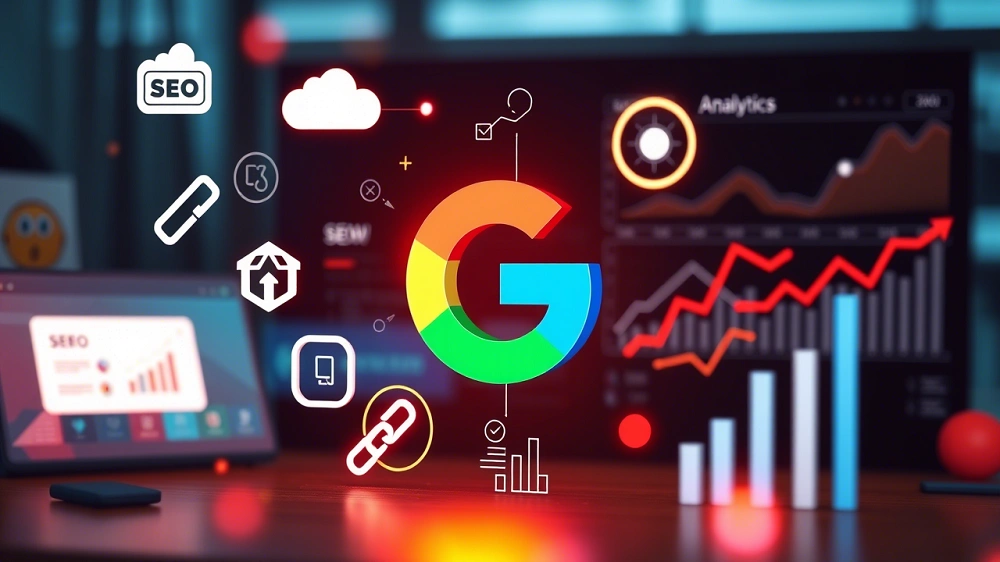
For companies engaged in foreign trade, it is extremely important to have a high-conversion, high-quality foreign trade website and use foreign trade SEO promotion to continuously bring target traffic and orders to the website. So how do we systematically carry out foreign trade SEO promotion work? This article will answer that for you one by one. I. Correctly Understand Foreign Trade SEO Promotion Foreign trade SEO promotion, as a way of website promotion, is only half-understood by many people. Therefore, we must first look at foreign trade SEO promotion correctly: Foreign trade SEO promotion is divided into two ways: white hat and black hat. White hat SEO follows search engine rules, aiming to optimize website quality and improve user experience; while black hat SEO adopts cheating methods, although effective for a time, it will eventually be discovered and punished. We recommend adopting the white hat SEO method. Foreign trade SEO promotion is not set in stone, it needs to keep up with the times. No SEO method is an eternal truth, we must abandon dogmatism, maintain an open mind, and constantly explore and adjust according to the actual situation. The purpose of foreign trade SEO promotion is to improve website quality and meet user needs, not solely to improve rankings and traffic. We should focus our optimization work around the user experience. Foreign trade SEO promotion requires input of human resources and material resources. To do it well, we cannot be afraid of trouble and money, such as hiring professionals to assist in completing some technical work. Be wary of various SEO hypes and rumors, and maintain a rational and sober understanding. Foreign trade SEO promotion will not end here,…

In the current tide of globalization, foreign trade website promotion has become an important means for Chinese enterprises to explore international markets and achieve transformation and upgrading. Effective foreign trade website promotion strategies require the integration of various online and offline marketing methods to form a synergy and achieve twice the result with half the effort. Therefore, foreign trade practitioners must attach great importance to foreign trade website promotion and continuously innovate and optimize their promotion plans to win more overseas orders. Comprehensive Foreign Trade Website Promotion Strategies Multi-platform Integrated Promotion In today’s internet era, third-party platforms are an important battlefield for foreign trade website promotion. Foreign trade enterprises need to integrate the traffic and buyer resources from multiple online and offline platforms to form a three-dimensional synergy for foreign trade website promotion. Leveraging B2B Platforms For the foreign trade industry, well-known B2B platforms such as Alibaba International Station, China Manufacturers, and Global Sources are indispensable important grounds for foreign trade website promotion. These platforms gather buyer resources and massive industry traffic from around the world, creating convenient conditions for foreign trade enterprises to connect with product sales and brand promotion. The biggest advantage of using B2B platforms for foreign trade website promotion is the ability to directly reach existing buyer groups and achieve efficient product display. At the same time, the platforms have huge traffic, which is conducive to rapid product exposure and acquisition of inquiry leads. However, it also requires facing fierce competition from peers, paying high service fees, and continuous investment to maintain product visibility. B2C Cross-border E-commerce Platforms In recent years, large cross-border e-commerce platforms such as Amazon, AliExpress, Wish, and DHgate have also become an…

Blogs serve as platforms for information dissemination and as channels for driving website traffic and exposure. Their layout design is crucial for attracting readers, enhancing user experience, and optimizing search engine rankings. In this regard, sidebars and footers become key elements for SEO optimization. This article will explain in detail why optimizing the sidebar and footer layouts of a blog is essential and provide some recommendations. Improving User Experience 1.1 Convenient Navigation Blog sidebars can serve as excellent navigational aids for users. By placing a table of contents, popular posts, related tags, etc., in the sidebar, readers can more quickly find content they are interested in, improving the overall user experience. 1.2 Increasing Interactive Elements Adding interactive elements such as social media links and recent comments to the sidebar and footer can foster reader engagement with the blog, increasing user stickiness. Such a design not only facilitates reader participation but also creates a stronger sense of community for the blog. A Tool for SEO Optimization 2.1 Keyword Layout Strategically placing keywords in the sidebar and footer can help improve a website’s search engine ranking. Ensuring the natural integration of keywords not only enhances the relevance of the content but also strengthens search engines’ recognition of the blog. 2.2 Internal Linking By including links to related articles, tags, etc., in the footer, not only can user dwell time be extended, but search engines are also provided with more information, increasing the website’s exposure opportunities in search results. Establishing a Professional Blog Image 3.1 Copyright Notice and Privacy Policy Adding a copyright notice and privacy policy to the footer helps establish a professional image for the blog. This not only demonstrates accountability…

In the wave of digitalization, the competition in the global market is becoming increasingly fierce. How can companies stand out on the international stage through foreign trade promotion strategies has become a crucial issue. Foreign trade promotion, as an important means for companies to expand into overseas markets, its effectiveness is directly related to the company’s global competitiveness. Definition and Importance of Foreign Trade Promotion Foreign trade promotion refers to the process by which companies use a series of market strategies to promote their products or services to the international market, with the aim of establishing brand awareness, attracting potential customers, and increasing sales performance. Against the backdrop of globalization, the importance of foreign trade promotion is self-evident, as it helps companies to cross borders and maximize their business value. Successful Foreign Trade Promotion Strategies When implementing foreign trade promotion, companies need to adopt a diversified strategy to adapt to the needs of different markets. The following are some proven effective methods of foreign trade promotion: Participating in International Trade Shows: Trade shows are an important platform for companies to display their products and technologies and communicate directly with potential customers. By participating in international trade shows, companies can effectively carry out foreign trade promotion. Utilizing B2B Platforms: B2B platforms provide companies with a broad window for display, allowing them to reach potential buyers worldwide, thus effectively promoting foreign trade. Search Engine Optimization (SEO): Optimizing website content and structure to improve search engine rankings is a key strategy to enhance the effectiveness of foreign trade promotion. Social Media Marketing: Social media platforms provide companies with the opportunity to interact with target customers, helping to increase brand awareness and customer loyalty….

With globalization, many websites have started to launch multilingual versions to better serve users in different countries. To make these multilingual websites more effective in search engine results pages in different regions, using hreflang tags becomes very important. So what are the benefits of setting up hreflang tags, and what impact would there be if hreflang tags are not set up? How should hreflang tags be configured under different circumstances? Let’s continue reading with these questions in mind. What are the benefits of websites setting up hreflang tags? ● Improves SEO issues with multilingual websites, allowing search engines to more accurately understand the language versions of a website, which helps improve rankings for multilingual websites. ● Improves user experience issues by allowing search engines to provide users with versions more suitable to their language preferences. ● Avoids duplicate content issues. By clearly defining the relationships between language and regional versions using hreflang tags, search engine penalization due to duplicate content can be avoided. What are the disadvantages if a website does not set up hreflang tags? ● If a website does not set up hreflang tags, it would have the following disadvantages: ● Risks search engines identifying duplicate content or mirrored pages. ● Inability to properly understand the website’s language structure. ● Degraded user experience. Let’s first take a look at Google’s official recommendation for multilingual websites as shown below: It is recommended from both an SEO and user perspective to use region-specific URLs in the format example.com/de/. Why choose this format? Firstly, it reduces SEO optimization complexity across sites. Secondly, customers only need to maintain one domain name, greatly reducing human resource needs. Reminder: Do not use IP analysis…

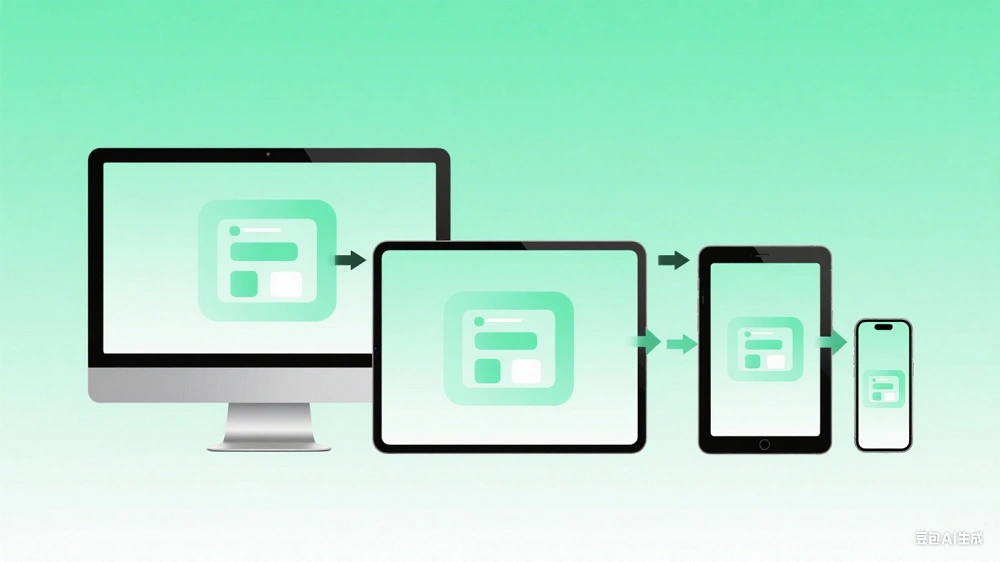
Basics of Canonical Tags The canonical tag in HTML is likely familiar to many. We can use this HTML tag to tell search engines that the canonical or “main” URL for a page is a certain one, avoiding issues with duplicate content. To implement properly, simply add the following code in the section of the web page: The href attribute points to the location of the primary version of the page. Benefits of Using Canonical Tags: 1.Concentrates authority, avoids diluting trafficFor example, merging parameters from multiple product pages into one primary product page, or redirecting www and non-www versions to the same domain. This combines authority and prevents fragmenting traffic. The same concept applies to short links redirecting to main URLs. 2.Unifies mobile and desktopSometimes mobile sites have lower authority than desktop. Canonical tags can consolidate both versions onto one authoritative page. 3.Improves search engine assessment accuracyInforming engines of the canonical URL aims to help them better judge the primary location of main site content, aiding SEO rankings. Though simple, proper implementation provides significant SEO assistance! Canonical Concepts in CSS While there are no canonical tags in CSS, optimization at various levels can still enhance SEO through CSS code: Rational content styling: Use proper heading tags for content sections instead of DIVs/SPANs uniformly. Apply semantic class/ID names. Helps search engines correctly understand and label key data. Mobile optimization: Catering the experience across devices, providing a seamless user flow improves engagement. Mixing long and short sentences also boosts appeal and readability. Media queries enable responsive designs. Controlling horizontal scrolls and sizing for screens are also key. Performance and standards compliance: Minifying CSS/JS, deferred non-critical resource loading improves speed. Caching also accelerates….

Here is the English translation: What is an SEO landing page? Before getting into the topic, let’s explain what an SEO landing page is first. The main purpose of a landing page is to convert potential users into customers. And landing pages are designed for specific SEO purposes, which are directly related in search engine optimization. Because in many cases, visitors’ first interaction with your website is through these pages. If the relevance between your target page and the user’s search intention is low, then the chance of conversion will be greatly discounted. The importance of keyword research in selecting landing pages? Before selecting landing pages, we need to first analyze the keywords you need to do SEO. This is a very important step. We need to have a good understanding of the part of speech of the keywords. We will divide keywords into several major categories: Nouns: Words that describe products, services, industries, etc.Examples: moisturizer, SEO service, accident insurance, education, etc. Adjectives: Words that describe product and service attributes.Examples: lightweight, cheap, delicious, fast, etc. Verbs: Words that describe product functions or user behaviors.Examples: learn, book, buy, download, etc. Phrases: Words composed of multiple words.Examples: air cushion sports shoes, Huawei mobile phone case, tourist resort hotel, etc. Long-tail keywords: Longer groups of words that more specifically describe user search needs.Examples: durable, non-fading outdoor leisure shorts Personal names: Such as business names, industry celebrities, entertainment stars, etc. These names also become search terms for some users.Place names: Some place names or locations can also be hot search words, like scenic spots, city names, etc. Interrogative words: Questions or problems entered by users can also appear as keywords.For example: What is an…

Dwell Time

What is Dwell Time? Precise Definition and Key Distinctions In the world of Search Engine Optimization, Dwell Time is a frequently mentioned but often misunderstood concept. Put simply, **Dwell Time is the duration of time that passes from the moment a user clicks on a search result in Google (SERP) to the moment they return to that search result page.** This is a critical metric for measuring search intent satisfaction. If a user enters a page and stays for 5 minutes before leaving, it strongly suggests the content is highly valuable. Conversely, if a user clicks back within 2 seconds, it sends a negative signal to Google, indicating the webpage might be irrelevant to the keyword or provide a poor experience. Dwell Time vs. Other Traffic Metrics To optimize accurately, we must distinguish Dwell Time from several similar metrics found in GA4 (Google Analytics 4). While they all involve time, they represent entirely different dimensions of user behavior: Metric Name Definition & Scope Core Significance for SEO Dwell Time Calculates only the time from a SERP click to the return to the SERP. Directly reflects searcher satisfaction with a specific result. Time on Page Time spent on a specific page…

What is Website User Experience (UX) and Its Core Components? User Experience (UX) is far more than just making a website “look pretty.” It encompasses every feeling and interaction a user has with your brand, website, or product. In the context of digital marketing, UX is a comprehensive metric used to evaluate whether a website effectively solves user problems, provides seamless navigation, and builds trust. The Core Components of UX Information Architecture (IA): This is the skeleton of the website, determining how content is categorized and organized. Good IA allows users to find what they need without cognitive friction. Visual Design: Utilizing color, typography, and spacing to guide the user’s eye and establish brand authority. Interaction Design: Focusing on button clicks, form completions, and animation feedback. Smooth interaction reduces the user’s cognitive load. Performance: Loading speed is the foundation of experience. Data shows that if a page takes longer than 3 seconds to load, bounce rates skyrocket. Why has UX become a core ranking signal? Google’s ultimate goal is to provide the “most valuable results” for searchers. If a top-ranking site frustrates users (e.g., excessive pop-ups, slow loading, unreadable content), users will quickly return to the Search Engine Results Page (SERP). This behavior, known as “Pogo-sticking,” signals to Google that the page does not meet user needs. Consequently, Google introduced the **Helpful Content Update** and **E-E-A-T** guidelines, emphasizing the utility of content and the quality of user interaction. The Correlation Mechanism between UX and Google SEO: Behavioral Signals and Core Metrics Search Engine Optimization has evolved from simple keyword stuffing to “intent satisfaction.” Google monitors how users interact with pages through complex algorithms, and this data feeds directly back into…

As the 2025 Google Hong Kong Year in Search results were released, a bombshell hit the marketing world: DeepSeek secured the top spot, followed closely by Grok and Gemini. This isn’t just a shift in tool popularity; it represents a fundamental pivot in how Hong Kong users search. As a senior consultant with over 20 years in cross-border B2B, I’ve observed that users no longer just click “blue links”—they demand structured, reasoned answers directly within AI interfaces. For companies investing in International Web Development (Export-oriented sites), if your content still relies on keyword stuffing, you are missing out on 80% of high-intent inquiry traffic. AI is no longer just a tool; it has become the “Intelligent Filter” between search engines and users. We must learn to move from “Search” to “Answer.” Why are DeepSeek, Grok, and Gemini Redefining HK Search Habits? What is “Conversational Search”? Moving from clicking links to instant answers In the past, when a Hong Kong user searched for “SEO courses,” they would browse the top three results on the Search Engine Results Page (SERP). Today, with the ubiquity of DeepSeek and Gemini, behavior has evolved into direct inquiries: “Which HK agency offers the fastest International Web Development with the best ROI?” or “How can B2B manufacturers improve visibility in Google AIO?” The core of “Conversational Search” is extreme intent fragmentation. Preliminary 2025 data shows that long-tail question queries in Hong Kong have grown by 145% compared to 2023, while click-through rates (CTR) for broad head terms have plummeted. Effectively, AI is performing “pre-sales screening” for the user. If your content doesn’t provide a precise solution, it won’t be cited in the AI Overview (AIO), and you…

Featured Articles

AI营销工具
AI Marketing Tools: Essential Solutions for Manufacturers’ Overseas Promotion?
SEO优化 vs. 广告投放
International Marketing Cost Comparison: SEO Optimization vs. Paid Advertising – Which is More Cost-Effective?
响应式布局
SEO Impact of Responsive Layouts: A Comprehensive Analysis from Technical Implementation to Ranking Improvement
谷歌SEO优化+AI
AI Marketing is Sweeping the Globe, But Google SEO Remains the Foundation of Foreign Trade Promotion
外贸推广2025
Complete Guide to Foreign Trade Promotion: Which Method is Best for Your Overseas Expansion?
SGE+外贸独立站
SGE Era: AI-Powered Strategies for Foreign Trade Growth
谷歌seo优化
The Complete 2026 Google SEO Optimization Guide: 8 Core Factors and Ranking Battle-Tested Strategies
Google演算法
【2026】Google Core Algorithm Updates
Google和Bing算法差异
Google vs Bing Algorithm Differences: Why Your Site Might Be “Out of Favor” with Google
结构化数据
What is Structured Data Markup?How Different Types of Markup Impact Foreign Trade SEO?