SEO Techniques, Ranking Optimization Tips and Strategies
Why B2B Platforms Are No Longer the Only Option In today’s globalized business environment, many foreign trade companies still rely on B2B platforms as their primary export channel. However, as market competition intensifies, the limitations of relying solely on B2B platforms are becoming increasingly apparent. Price wars, product homogenization, platform commissions, and other issues continue to squeeze profit margins. More importantly, companies cannot establish their brand image or customer databases through B2B platforms. Independent e-commerce websites are becoming a strategic choice for more and more export companies. By building their own independent websites, companies can fully control customer data, shape brand image, and achieve higher profit margins. However, the success of an independent website depends on effective promotion strategies. This article will detail five of the most effective promotion methods for foreign trade independent websites, with a focus on how SEO and AI technology can help companies achieve rapid growth. B2B Platforms vs. Independent Websites: The Truth You Need to Know B2B platforms like Alibaba and Global Sources do provide foreign trade companies with quick exposure channels, but their limitations are becoming more evident. First, price wars on these platforms severely compress profit margins, forcing many companies to maintain competitiveness with minimal or even negative profits. Second, product homogenization on these platforms makes it difficult for your products to stand out among numerous competitors. In contrast, independent foreign trade websites offer many advantages: complete control over customer data and the ability to build your own customer database; freedom to shape brand image and enhance product premium pricing; elimination of platform commissions for higher profit margins; and the ability to quickly adjust marketing strategies based on market changes. Although independent websites…
The Huge Opportunities and Challenges in Medical Device Export Market In recent years, the global medical device market has continued to expand, with projections reaching $600 billion by 2025. As the world’s second-largest medical device manufacturer, China’s export volume has grown year after year, exceeding 100 billion RMB in 2022. However, as market competition intensifies, traditional export models face numerous challenges: rising customer acquisition costs, insufficient brand awareness, and imprecise target customer positioning plague many medical device export companies. Global Medical Device Market Size (2025 Projection) $600 Billion China’s Medical Device Exports (2022) 100B RMB In this market environment, how can companies break through and find new growth points? Google Marketing, with its precise and efficient characteristics, has become a powerful tool for medical device exporters to explore overseas markets. Through Google, the world’s largest search engine platform, companies can directly reach potential customers in over 190 countries and regions, achieving precision marketing. Why Medical Device Companies Must Prioritize Google Marketing For medical device exporters, Google Marketing is not just simple advertising but a complete digital marketing solution. First, Google holds over 90% of the global search engine market share, processing more than 100 billion search queries monthly, representing a massive pool of potential customers. Second, Google’s precise targeting technology ensures your product ads are shown only to genuine buyers, such as hospital procurement managers and medical device distributors. Data Comparison: Medical device exporters using Google Marketing: Average customer acquisition cost reduced by over 30% compared to traditional channels Conversion rates increased 2-3 times More importantly, Google Marketing provides a complete conversion tracking system. Data from ad impressions, clicks to inquiries and transactions are all visible. This allows companies to…
Challenges and Opportunities in Security Product Export With the increasing global awareness of security, the export market for security products is facing unprecedented growth opportunities. According to industry analysis, the global security market is expected to maintain an annual growth rate of over 8% in the next five years. However, for many Chinese companies, how to effectively promote security products and acquire overseas customers has become a critical challenge. Among various overseas promotion methods, SEO (Search Engine Optimization) has attracted significant attention due to its high cost-effectiveness and quality traffic. At the same time, channels like PPC advertising and social media marketing each have their unique characteristics. This article will provide an in-depth analysis of the advantages and disadvantages of SEO in security product export promotion and compare it with other mainstream promotion methods to help you find the most suitable international marketing strategy for your business. Advantages and Limitations of SEO (Search Engine Optimization) As an important method for promoting security product exports, the core advantage of SEO lies in its ability to generate high-quality, targeted traffic. When overseas buyers search for keywords like “CCTV camera supplier” or “security alarm system manufacturer,” websites ranking at the top often receive numerous inquiries. The main advantages of SEO include: Long-term stable traffic source: Unlike paid ads, once SEO rankings are established, they can continuously generate traffic without additional click costs. Strong user search intent: Users searching for security products through search engines typically have clear purchase intentions, resulting in higher conversion rates. Builds brand trust: Websites ranking high in organic search results are often perceived as more authoritative and trustworthy by users. High cost-effectiveness: Although the initial investment is substantial, the…
Introduction to Google SEO 8 Core Factors Comparison with Baidu Practical Tools Why is Google SEO So Important? In today’s digital marketing landscape, Google SEO has become a core strategy for businesses to acquire online traffic. According to recent statistics, Google handles 92% of global search queries, making Google SEO indispensable for any business seeking online success. Professional Google SEO is not just about keyword stuffing—it’s a systematic process involving technical optimization, content strategy, and user experience. Through scientific Google SEO methods, businesses can: Improve their website’s organic ranking in Google search results Gain more targeted customer traffic Establish brand authority within their industry Reduce customer acquisition costs and increase ROI Google SEO Performance Data 53% of website traffic comes from organic search 8-10x higher conversion rate for SEO traffic vs. ads 75% of users never click beyond the first page (Source: BrightEdge 2023 Annual Report) Implementing Google SEO requires long-term investment, but compared to paid ads, it delivers more stable, higher-quality traffic. A successful Google SEO strategy should include three pillars: technical optimization, content creation, and backlink building. 8 Core Factors Affecting Google SEO To successfully implement Google SEO, it’s essential to fully understand the key factors influencing search rankings. Here are eight professionally validated Google SEO elements: 1. Content Quality and Depth In Google SEO, content quality remains the top ranking factor. Google’s algorithms are increasingly adept at identifying content depth, originality, and usefulness. Based on our Google SEO experience, high-quality content should: Comprehensively cover topics—content over 2,000 words performs best Include original research, data, or unique perspectives Solve real user problems rather than just stuffing keywords Be regularly updated for timeliness Content Quality Checklist: Does it provide…
A Comprehensive History of Google Search Algorithm Updates Google’s search algorithms are constantly evolving to deliver the most relevant, helpful, and high-quality search results. Historically, many updates were given specific code names, often animal-themed. In more recent years, Google’s major algorithm changes are officially referred to as “Core Updates.” 2025 March 2025 Core Update Time: Started March 13, 2025 (currently ongoing). Focus: Overall Ranking System Improvement: Broad adjustments to Google’s core systems for evaluating page quality, relevance, and authority. Content Quality Enhancement: Aims to further reward high-quality, original, and valuable content for users, while reducing the visibility of low-quality or unoriginal content. User Intent Understanding: Continued optimization of understanding user search intent to provide more precise search results. Potentially High Volatility: As a core update, it’s expected to cause significant fluctuations in website rankings across various industries. 2024 December 2024 Spam Update Time: Started December 19, 2024, lasted approximately 7 days. Focus: Primarily aimed at combating various forms of spam content, including automatically generated content, doorway pages, and cloaking, to improve the relevance and reliability of search results. December 2024 Core Update Time: Started December 12, 2024, lasted approximately 6 days. Focus: Adjustments to core ranking signals, fine-tuning the hundreds of signals Google uses to evaluate content and websites, continually enhancing content relevance and quality in search results. November 2024 Core Update Time: Started November 11, 2024, lasted approximately 24 days. Focus: Broad adjustments to the overall ranking system, designed to deliver more relevant, helpful, and user-intent-aligned content. Continued evaluation of authority and trustworthiness (E-E-A-T). August 2024 Core Update Time: Started August 15, 2024, lasted approximately 19 days. Focus: Increased visibility for helpful content, prioritizing genuinely useful, valuable, and original…
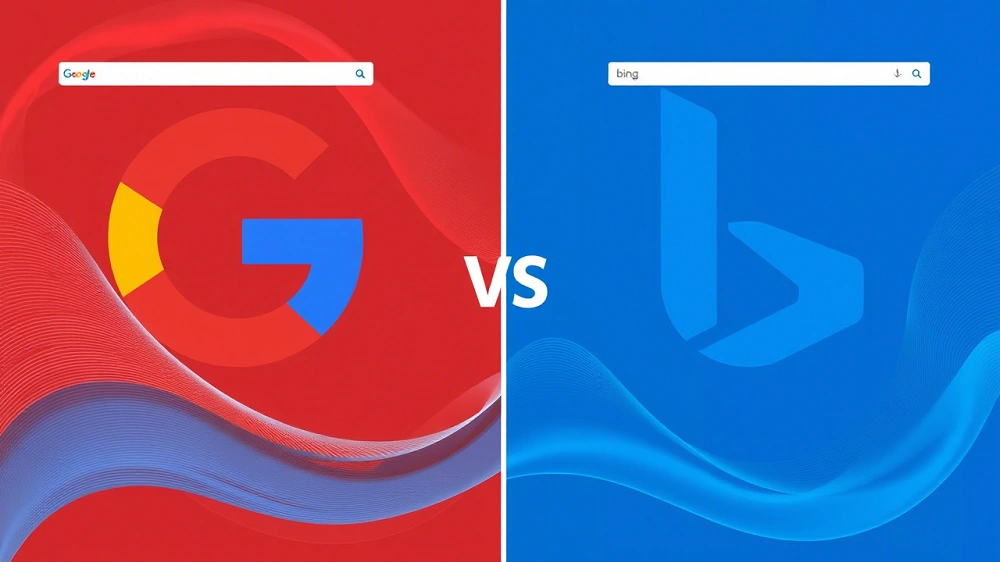
Have you ever encountered this situation: your website ranks high on Bing but performs poorly on Google? This phenomenon is actually quite common. Many website owners find that their SEO efforts seem to yield better results on Bing, while requiring much more effort to achieve similar rankings on Google. The main reason behind this lies in the core differences between the two search engines’ algorithms. Google vs Bing: Algorithm Showdown While both Google and Bing are search engines, their algorithmic focus differs significantly. Google has recently emphasized the E-E-A-T principle (Experience, Expertise, Authoritativeness, and Trustworthiness), meaning Google places more value on content depth, author credentials, and the overall authority of a website. In contrast, Bing’s algorithm gives more weight to technical factors and keyword matching, which explains why some websites ranking low on Google might perform well on Bing. A key difference is: Google focuses more on user experience and content quality, while Bing leans more toward traditional SEO signals. For example, Bing relies much more heavily on meta tags than Google does, making optimization of meta descriptions and title tags more directly effective on Bing. Additionally, Bing places greater importance on social media signals than Google, meaning your social media activity may have a more direct impact on your Bing rankings. Algorithm Weight Comparison Google Content Quality (35%) User Experience (25%) Backlinks (20%) Technical SEO (15%) Keyword Matching (5%) Bing Keyword Matching (30%) Technical SEO (25%) Backlinks (20%) Content Quality (15%) Social Media (10%) Technical SEO: The Overlooked Google Ranking Killer If your website ranks low on Google but high on Bing, technical SEO issues are likely the main reason. Google has extremely strict requirements for a website’s technical…
In today’s globalized world, the eyewear export business is experiencing unprecedented growth opportunities. Whether it’s fashionable sunglasses, professional optical glasses, or various eyewear accessories, the international market shows immense demand potential. However, faced with numerous overseas promotion channels, many eyewear exporters often feel confused: Which method is the most suitable for their products? How can they achieve the best promotion results with a limited budget? This article will comprehensively analyze the five mainstream promotion channels for exporting eyewear overseas, helping you take the first step into the international market. Google Ads: A Precise and Fast Customer Acquisition Tool For eyewear exporters looking to quickly enter the overseas market, Google Ads is undoubtedly the most direct and effective option. Through keyword ads, you can accurately display your products to potential customers searching for terms like “wholesale sunglasses” or “eyewear accessories suppliers.” The biggest advantage of Google Ads lies in its precise targeting capabilities and instant feedback on results. You can set ad strategies tailored to different countries, languages, and interest groups. Professional Advice: Combine long-tail keyword strategies, such as “blue light blocking glasses wholesaler” or “OEM children’s sunglasses,” to reduce click costs and improve conversion rates. Additionally, Google Shopping ads are an excellent way to showcase eyewear products. Social Media Marketing: The Main Battlefield for Building Brand Influence In the visually-driven eyewear industry, social media platforms like Instagram, Facebook, and Pinterest have a natural advantage. These platforms not only help you showcase the design details and wearing effects of your eyewear products but also allow you to build brand image through interaction. Instagram Strategy Regularly post new eyewear products and styling tips Collaborate with fashion influencers for product reviews Use Instagram…
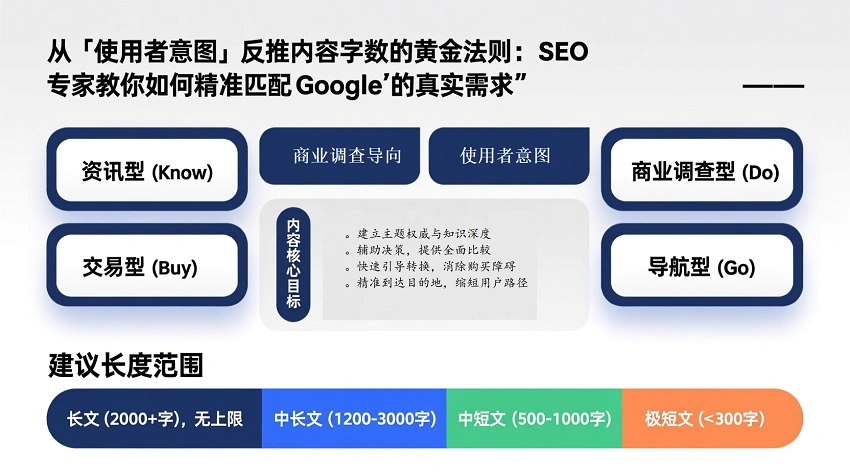
Say Goodbye to Word Count Anxiety, Embrace the New Era of E-E-A-T Logic After confirming that “word count is not a decisive factor for ranking,” the core challenge all content creators must face is: How do we define the boundaries of “high-quality content”? Seasoned SEO experts know that Google doesn’t care about word count; it cares about content utility. A 500-word article that perfectly answers a user’s complex question is far more valuable than a 5,000-word piece of general talk. This “Golden Rule” will take you deep into understanding: the ideal length of content is determined by analyzing user intent and building Topical Authority. We will use the E-E-A-T (Experience, Expertise, Authoritativeness, Trustworthiness) framework to precisely match Google’s real needs. Part 1: Professional Insights: Intent, Depth, and Topical Authority User Intent is the primary indicator used by Google’s algorithms (like RankBrain, BERT, and MUM) to judge content relevance. Your article length must serve this intent, otherwise, it leads to Content Dilution. Intent Type Content Core Goal Professional Insights: SEO Impact Informational (Know) Establish E-E-A-T image and comprehensively cover the topic. Through Topic Clusters strategy, build Topical Authority to establish the website as an authority in that field. Transactional (Buy) Maximize…
Key Insight: Choosing the wrong technology stack is the biggest hidden cost for independent sites. Data shows that 47% of cross-border sellers are forced to rebuild their websites within 2 years due to technical limitations, with average losses reaching 3 times the initial investment. The right technical roadmap can improve SEO effectiveness by 40% and conversion rates by 30%. Last week, another client approached us. His Shopify store hit a bottleneck after monthly sales exceeded $500,000: website loading speed was over 5 seconds, URL structure couldn’t be optimized, and weak blog functionality hampered content marketing effectiveness. Most painfully, 5 years of customer data and SEO equity were almost impossible to migrate. "If I had spent more time choosing the right technical path initially, I wouldn’t be so passive now." His sentiment echoes that of countless sellers. As a consultant with 18 years of experience in cross-border digital marketing, I have witnessed too many cases where poor technology selection led to heavy costs. This article will deeply analyze the pros and cons of Shopify, WordPress, and custom solutions, helping you avoid the trap of technical debt and choose the technical path most suitable for your business development. Panoramic View: Three Main Technical Paths for Cross-border Independent Sites Before diving into comparisons, we need to understand the fundamental differences between the three main technical paths. This is not just a tool choice, but a reflection of the business model. SaaS Hosted Type: "Turnkey Solution" in E-commerce Representative Platforms: Shopify, Shoplazza, Shopline, etc. Core Characteristics: Use platform services like renting, without worrying about server maintenance and technical details. Shopify, as the industry leader, provides a complete e-commerce solution, encompassing everything from payments and…
Key Insight: By 2025, cross-border e-commerce will enter an era of dual-track operation with "Marketplace + Independent Site". Data shows that the average profit margin for pure marketplace sellers has dropped from 25% in 2019 to 12% in 2024, while sellers who successfully operate independent sites maintain margins of 18-35%. This is not a simple either/or choice, but a strategic complement. Recently, I’ve received many inquiries from sellers: "Amazon’s advertising costs have increased again, ACoS is already over 40%, should I continue spending?" "My Shopee store was suddenly suspended, what should I do with the piled-up inventory?" These anxieties reflect a harsh reality: the marketplace (red dividend period) is fading, and business models solely reliant on marketplaces face significant challenges. As a consultant with 18 years of experience in cross-border digital marketing, I must be honest with you: an independent site is not a cure-all, but it is indeed a necessary path for brand globalization. This article will use detailed analysis from dimensions like traffic control, data assets, and cost structure to help you objectively assess whether you should open the second growth curve for your cross-border e-commerce business. Why is Everyone Talking About ‘Independent Sites’ Now? According to the latest data from Marketplace Pulse, in 2024, the average customer acquisition cost for sellers on Amazon US increased by 67% compared to 2021, while the average selling price decreased by 15%. This scissor effect of "rising costs, falling prices" is squeezing sellers’ profit margins. Three Signals of the Fading Marketplace红利 (Hónglì – Dividend) Exponential Increase in Customer Acquisition Cost: The average Amazon CPC cost was $0.8 in 2020 and has risen to $1.5 by 2024. In some popular categories like…
Featured Articles