SEO Techniques, Ranking Optimization Tips and Strategies
To achieve high rankings in Googles search engine a methodical and progressive approach is necessary. Developing a comprehensive optimization plan is essential to master the art of Google SEO ranking. Generally. The optimization process involves three main aspects: off page SEO, on page SEO, and technical SEO. In the following sections. We will provide practical strategies and helpful advice for each of these areas. Optimizing Technical Aspects for Google SEO Ranking Apart from on page and off page optimization attention should also be given to technical aspects of SEO. This includes addressing the following key points: Website Code Structure: Is the websites’ code clean and well organized? Mobile Compatibility: Does the website work seamlessly on mobile devices? Is it designed with responsiveness in mind? According to Google responsive websites tend to rank higher. Website Server Configuration and Bandwidth: Is the website server properly configured? Can the entire site load within 5 seconds? Page Compression: Are web pages compressed for faster loading? CDN Acceleration: Is your website utilizing Content Delivery Network (CDN) acceleration? SSL Certificate: Does your website have an SSL certificate? Google emphasizes that websites with SSL certificates have a better chance of being prominently displayed. On Page SEO Strategies for Better Google Rankings On page optimization focuses on optimizing individual web pages by strategically placing keywords and more. Here are some key considerations: Keyword Integration: Ensure that your page title and description incorporate relevant keywords for better visibility. Utilize Heading Tags (H Tags): Give your web pages clear content hierarchy by using well structured heading tags. 3.Breadcrumb Navigation: Facilitate search engine crawling by implementing breadcrumb navigation throughout your website. High Quality Content: Provide valuable solutions to users’ problems through…
Google ranking optimization is extremely important for any business or personal website that wants to gain good exposure on the internet. Through Google ranking optimization, websites can achieve higher ranking positions when users search for relevant keywords, thereby attracting more valuable traffic to the site. So what key factors influence Google ranking optimization? Google ranking optimization requires considering multiple factors to ensure that your website adheres to Google’s best practices and standards. Optimizing your website involves regularly tracking the latest SEO trends and techniques, and developing an appropriate Google ranking optimization strategy based on your website’s needs and goals. There are many factors that affect the effectiveness of Google ranking optimization. Today, we will list some common key factors that influence Google ranking optimization, hoping to provide help! The top 10 key factors for Google ranking optimization are summarized as follows: 1. Content Quality and Relevance Content is the most fundamental and critical factor for Google ranking optimization. Google gives higher rankings to high-quality and highly relevant content. Search engines analyze the content on your website, including articles, videos, images, etc., and determine their relevance to user search queries. To optimize your website and achieve good Google rankings, you need to create high-quality and highly relevant content around relevant keywords. Website content should be valuable, original, easy to understand, and aligned with user search intent in order to gain higher weightings in Google ranking optimization. 2. Website Structure A well-structured, architecturally optimized website is very important for Google ranking optimization. Google favors websites that are easy to navigate, content-rich, and run smoothly across different devices. Therefore, optimizing the website structure involves improving website loading speed, page response time, optimizing design…
- « Previous
- 1
- …
- 18
- 19
- 20
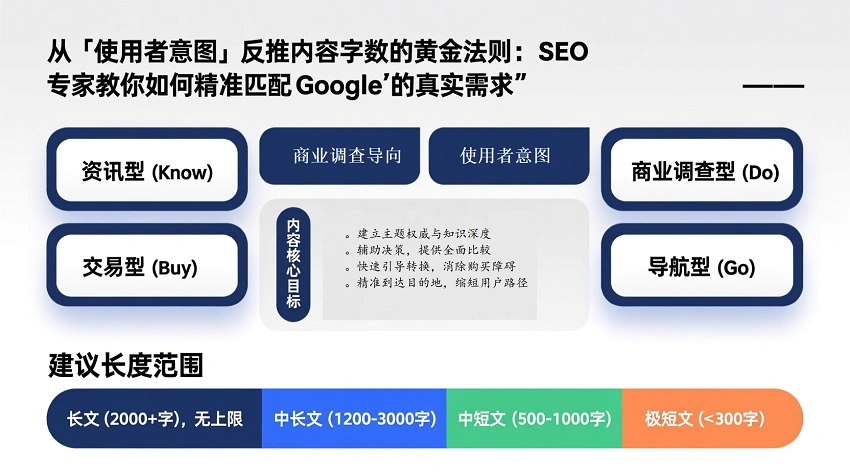
Say Goodbye to Word Count Anxiety, Embrace the New Era of E-E-A-T Logic After confirming that “word count is not a decisive factor for ranking,” the core challenge all content creators must face is: How do we define the boundaries of “high-quality content”? Seasoned SEO experts know that Google doesn’t care about word count; it cares about content utility. A 500-word article that perfectly answers a user’s complex question is far more valuable than a 5,000-word piece of general talk. This “Golden Rule” will take you deep into understanding: the ideal length of content is determined by analyzing user intent and building Topical Authority. We will use the E-E-A-T (Experience, Expertise, Authoritativeness, Trustworthiness) framework to precisely match Google’s real needs. Part 1: Professional Insights: Intent, Depth, and Topical Authority User Intent is the primary indicator used by Google’s algorithms (like RankBrain, BERT, and MUM) to judge content relevance. Your article length must serve this intent, otherwise, it leads to Content Dilution. Intent Type Content Core Goal Professional Insights: SEO Impact Informational (Know) Establish E-E-A-T image and comprehensively cover the topic. Through Topic Clusters strategy, build Topical Authority to establish the website as an authority in that field. Transactional (Buy) Maximize…
Key Insight: Choosing the wrong technology stack is the biggest hidden cost for independent sites. Data shows that 47% of cross-border sellers are forced to rebuild their websites within 2 years due to technical limitations, with average losses reaching 3 times the initial investment. The right technical roadmap can improve SEO effectiveness by 40% and conversion rates by 30%. Last week, another client approached us. His Shopify store hit a bottleneck after monthly sales exceeded $500,000: website loading speed was over 5 seconds, URL structure couldn’t be optimized, and weak blog functionality hampered content marketing effectiveness. Most painfully, 5 years of customer data and SEO equity were almost impossible to migrate. "If I had spent more time choosing the right technical path initially, I wouldn’t be so passive now." His sentiment echoes that of countless sellers. As a consultant with 18 years of experience in cross-border digital marketing, I have witnessed too many cases where poor technology selection led to heavy costs. This article will deeply analyze the pros and cons of Shopify, WordPress, and custom solutions, helping you avoid the trap of technical debt and choose the technical path most suitable for your business development. Panoramic View: Three Main Technical Paths for Cross-border Independent Sites Before diving into comparisons, we need to understand the fundamental differences between the three main technical paths. This is not just a tool choice, but a reflection of the business model. SaaS Hosted Type: "Turnkey Solution" in E-commerce Representative Platforms: Shopify, Shoplazza, Shopline, etc. Core Characteristics: Use platform services like renting, without worrying about server maintenance and technical details. Shopify, as the industry leader, provides a complete e-commerce solution, encompassing everything from payments and…
Key Insight: By 2025, cross-border e-commerce will enter an era of dual-track operation with "Marketplace + Independent Site". Data shows that the average profit margin for pure marketplace sellers has dropped from 25% in 2019 to 12% in 2024, while sellers who successfully operate independent sites maintain margins of 18-35%. This is not a simple either/or choice, but a strategic complement. Recently, I’ve received many inquiries from sellers: "Amazon’s advertising costs have increased again, ACoS is already over 40%, should I continue spending?" "My Shopee store was suddenly suspended, what should I do with the piled-up inventory?" These anxieties reflect a harsh reality: the marketplace (red dividend period) is fading, and business models solely reliant on marketplaces face significant challenges. As a consultant with 18 years of experience in cross-border digital marketing, I must be honest with you: an independent site is not a cure-all, but it is indeed a necessary path for brand globalization. This article will use detailed analysis from dimensions like traffic control, data assets, and cost structure to help you objectively assess whether you should open the second growth curve for your cross-border e-commerce business. Why is Everyone Talking About ‘Independent Sites’ Now? According to the latest data from Marketplace Pulse, in 2024, the average customer acquisition cost for sellers on Amazon US increased by 67% compared to 2021, while the average selling price decreased by 15%. This scissor effect of "rising costs, falling prices" is squeezing sellers’ profit margins. Three Signals of the Fading Marketplace红利 (Hónglì – Dividend) Exponential Increase in Customer Acquisition Cost: The average Amazon CPC cost was $0.8 in 2020 and has risen to $1.5 by 2024. In some popular categories like…
Featured Articles